Inner Mastery Facilitation School · 2027 – 2028

Become the facilitator people trust in the moments that matter most.

A two-year training for facilitators, coaches, practitioners, and emerging leaders who want to guide transformational work with more skill, more integrity, and more presence. You will not watch this school happen. You will learn by doing, through live demonstration, guided experience, facilitation practice, direct feedback, honest self-examination, and four residential intensives in Hungary and California.

Two years · 2027 – 2028Four residential intensivesHungary and CaliforniaApplications open September 23, 2026

The most important instrument in the room is you.

Before we can be trusted with the inner work of others, we have to be willing to do our own. Our fears, triggers, wounds, assumptions, desires, biases, gifts, and protective strategies walk into every room with us. When they stay unseen, they shape how we listen, how we use authority, what we avoid, and what we quietly try to make happen.

Inner mastery is the ongoing practice of recognizing those forces without letting them run the work. In this school you learn to become more present and more empty, less attached to performing, fixing, rescuing, or producing a dramatic result. From that ground you can listen further down, perceive more accurately, and answer what the moment is actually asking for.

This is not a course you watch. It is not a shortcut, and it is not another collection of techniques. It is a school for people who take the responsibility of facilitation seriously.

Inside the school

When the moment is real, people experience who you are, not what you know.

So the school develops the person of the facilitator as seriously as it develops the facilitator’s methods. Over two years you build:

  • Embodied facilitation and leadership presence
  • Emotional attunement and discernment
  • Stronger boundaries and clearer ethical awareness
  • Practical skill in creating safety and containment
  • Deeper listening and relational intelligence
  • Confidence in emotionally charged moments
  • Frameworks for trust, accountability, feedback, and integration
  • Awareness of your own triggers, shadows, projections, and attachments
  • The ability to follow the participant instead of forcing an outcome
  • The judgment to know when to lead, when to wait, when to ask for support, and when to pass the work
  • The capacity to hold one person while staying aware of the entire room

The curriculum

Seven Masteries, deepened over two years.

Strong facilitation is not knowing which process to run. The curriculum is built around seven interdependent capacities that shape how a facilitator perceives, responds, relates, and leads. Each one deepens across the full two years through demonstration, guided experience, practice, direct feedback, and honest self-examination.

01

Inner Mastery

The lifelong practice of knowing yourself well enough that fear, ego, wound, and agenda are not quietly running the room for you.

Your triggers, judgments, biases, desires, rescuer patterns, need for recognition, appetite for a dramatic outcome, and the honest edge of your competence. It is first for a reason. It is the floor the other six stand on.

02

Presence

The ability to stay grounded, open, and available to what is happening now.

Self-awareness, regulation, embodied attention, beginner's mind, non-attachment to outcome, and the discipline of getting empty enough to serve the moment.

03

Perception

The ability to notice what is being said through words, body, emotion, silence, relationship, and energy.

Curiosity, observation, somatic awareness, open questions, Clean Language, and telling the difference between what you actually perceive and what you are projecting.

04

Pattern

The ability to recognize the recurring structure underneath behavior and story.

Parts, protectors, risk managers, shadow, developmental wounding, coping strategy, archetypal energy, relational cycles, and the way personal history keeps writing the present.

05

Process

The ability to choose, build, adapt, and complete an intervention in service of the person in front of you.

Individual process, psychodrama, parts work, archetypal process, somatic expression, anchoring, integration, and collective work. Safety, consent, pacing, closure, and knowing when to pass the ball.

06

Relationship

The ability to build trust, work in partnership, and use relationship itself as the place where the work happens.

Consent, relational presence, boundaries, clear agreements, feedback, repair, accountability, and shared leadership. The Art of Partnership runs through all of it.

07

The Room

The ability to sense and lead the whole container, not only the person currently speaking.

Group attunement, collective facilitation, staff awareness, emotional contagion, inclusion, containment, transitions, and the ethical use of authority.

The practices behind the masteries

These are tools. They do not define the school.

You will work with material drawn from many traditions. The point is never to accumulate more of them. The point is the discernment to know which one this moment needs, and the presence to hold it when you choose.

Unconscious Pattern WorkInternal Family SystemsGestaltVoice DialogueNLPImagoPsychodramaFamily ConstellationsSomatic and bioenergetic workClean LanguageGUTSArchetypal psychologyRelational practiceGroup process

The two-year journey

One cohort. Two years. Four rooms you will never forget.

Year One

Foundations of Embodied Facilitation

Year One builds the ethical, relational, and embodied floor of the work. You learn to create safety, to know yourself more honestly, to perceive what is actually happening, and to facilitate without forcing.

  • Orientation, agreements, ethics, scope, and responsibility
  • Know Thyself, and the inner life of the facilitator
  • Physical, emotional, mental, spiritual, and energetic safety
  • Presence, regulation, embodiment, and non-attachment
  • Curiosity and open inquiry
  • Consent, boundaries, partnership, and repair
  • Shadow, parts, protectors, risk managers, and projection
  • Archetypal energy in its light and its shadow expression
  • Somatic awareness and embodied communication
  • Individual process, psychodrama, and reading the group field
  • Anchoring, integration, aftercare, and closure
  • Giving and receiving feedback that is specific enough to use
First intensive

Foundations of Presence and Safety

The cohort container gets built. You practice embodied presence, examine your own patterns in front of witnesses, and set the agreements that ethical facilitation rests on.

Second intensive

Perception, Pattern, and Process

Deeper inquiry, somatic perception, parts and unconscious pattern work, psychodrama, choosing a process, and supervised practice with real material.

Year Two

Applied Facilitation and Mastery

Year Two moves from foundational skill into adaptive leadership. You work with more complexity, collaborate with other facilitators, hold the whole room, and practice under supervision.

  • Advanced process design and adaptation
  • Individual, relational, and collective processes
  • Psychodrama, role reversal, mirroring, doubling, and parts work
  • Group dynamics, collective emotion, and leading a container
  • Partnership, co-facilitation, and staff-team awareness
  • Working responsibly with resistance, intensity, and uncertainty
  • Recognizing your limits, passing the work, and referring out
  • Trauma-aware pacing and integration
  • Leadership presence and the ethical use of power
  • Facilitating across cultures, identities, and communities
  • Practicum design, delivery, observation, and feedback
  • Your own philosophy of practice, and where you take it next
Third intensive

Relationship, Leadership, and the Room

Co-facilitation, relational dynamics, group process, collective facilitation, leadership presence, and containers with real complexity in them.

Fourth intensive

Integration, Practicum, and Initiation

You facilitate under supervision, receive developmental feedback, complete your integration work, and get clear about how you carry this forward.

Two live intensives a year, one in Hungary and one in California, four across the two years. Venues and exact dates are published here before applications close. Cohort size is limited.

Completion

Completion rests on participation, practice, reflection, feedback, ethical conduct, and demonstrated growth across the Seven Masteries. This school values trustworthiness, maturity, self-awareness, safety, and responsiveness. It does not reward performance or dramatic technique.

Graduates receive a Certificate of Completion from the Inner Mastery Facilitation School. Not a license. Not an accredited certification. A record of two years of real practice, feedback, and growth across the Seven Masteries.

How you learn

You learn by doing. There is no other way.

Facilitation cannot be learned from information. It takes repetition, relationship, observation, direct feedback, honest self-examination, and the chance to practice when the outcome is genuinely not predictable. You will not study how to create safety, navigate intensity, and hold a room. You will do those things with real people, and then hear the truth about your presence, your impact, your choices, and your blind spots.

Weekly

Recorded teaching

Each week I send the cohort a focused teaching, a story, a demonstration, or a practice prompt, connecting the philosophy of the school to what actually happens in a room.

Weekly

Peer practice

You meet with a buddy, a small team, or your cohort group to practice, to be held accountable, and to integrate. Repetition with real people is how this becomes yours.

Twice monthly

Live cohort calls

The cohort meets online twice a month with Vince, and with Karen when she is available. Teaching, demonstrations, case consultation, questions, practice, feedback, and preparation for the next intensive.

Four times in two years

Residential intensives

Four live intensives give you the depth and continuity that cannot be replicated online. You work with real group dynamics, practice with supervision, and feel how a container changes as it matures.

The cohort is part of the curriculum. Students are expected to practice honest communication, respect boundaries, repair impact, receive feedback, protect confidentiality, and contribute to the safety and learning of the whole group.

Fit

This is for you if

  • You already support people through change, and you know technique alone is not enough
  • You are called to lead men's work, women's work, circles, workshops, or groups, and you take that responsibility seriously
  • You want stronger discernment, deeper presence, and more embodied confidence
  • You want a community where your practice can mature over years, not over a weekend
  • You are willing to look at the ego, bias, shadow, and blind spots you carry into the rooms you lead

Therapists, coaches, counselors, healers, facilitators, organizational and community leaders, nurses, recovery professionals, and leaders in men’s and women’s work all belong in this room.

This is not for you if

  • You want a shortcut, a credential, or a bigger pile of techniques
  • You want to perform transformation rather than serve it
  • You are unwilling to examine your own patterns and your own impact
  • You are in acute clinical crisis. Get stable care first, and come to this when you are ready

This program is educational and experiential. It is not psychotherapy, and it does not replace professional licensure, clinical training, or emergency mental-health care.

Faculty and lineage

Who holds the room.

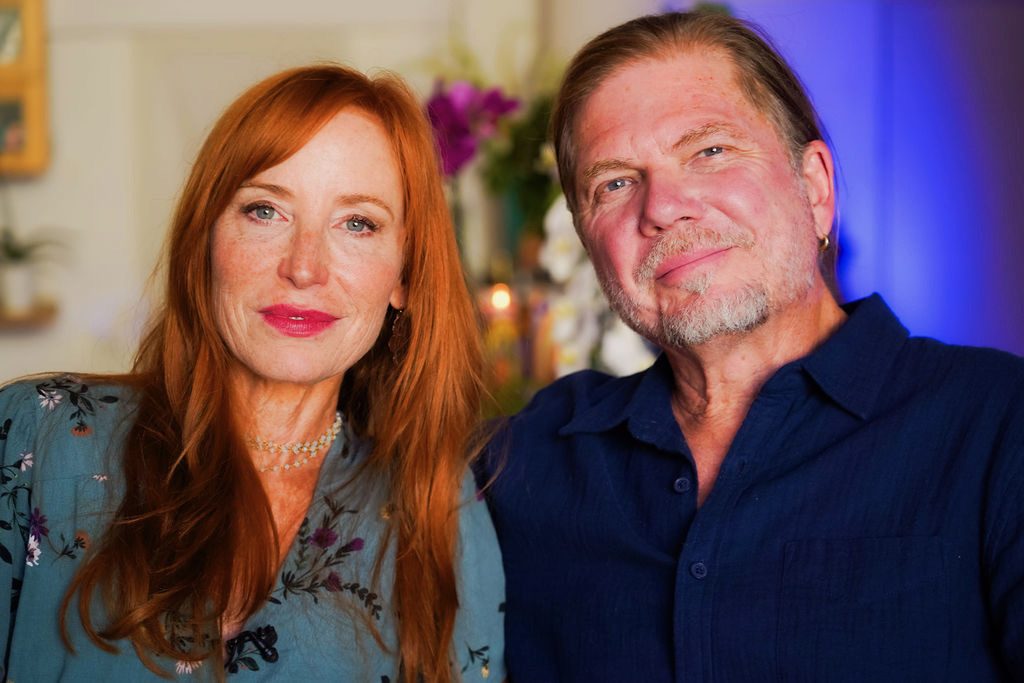
Vince Chafin and Karen Strassman

Founders and Lead Faculty

Vince Chafin and Karen Strassman

Twenty-five years guiding men, women, and couples through the deep work of the psyche across four continents, rooted in the mythopoetic men's movement and trained across psychodrama, somatic, and experiential transformation traditions. I did not build this school to make more facilitators who can perform transformation. I built it because I have watched what happens in a room when the person holding it has not done their own work, and I would rather train people the hard, honest way than watch that again.

Karen Strassman is passionate about the human condition and the transformative power of storytelling, and has spent her life immersed in the healing arts, theatre, psychology, philosophy, sacred ceremony and human development. As an actor, director, producer and coach, she collaborates with artists all around the world exploring and delving into the human condition, and leads classes and workshops inspiring people to access their own light, vulnerability, power, and brilliance.

We teach this school together. Karen joins the live cohort calls when she is available, and stands in the room with me at the intensives.

Lineage

This school stands on other people's shoulders and says so. It draws on decades of experiential personal-growth work and on the traditions below, acknowledged as sources of learning rather than claimed as property or credential.

Unconscious Pattern Work · Internal Family Systems · Gestalt · Voice Dialogue · NLP · Imago · psychodrama · Family Constellations · somatic and bioenergetic work · Clean Language · GUTS · archetypal psychology · relational practice · group process

Tuition and participation

Founding Cohort tuition

$16,500for the complete two-year program
  • Paid in full, due on enrollment$16,500
  • Or an enrollment payment that holds your place$3,000
  • Then 6 monthly payments from January 1, 2027, $17,250 in total$2,375 each
  • Then 12 monthly payments from January 1, 2027, $18,000 in total$1,250 each

Nothing is paid to apply. Payment happens only after you are offered a place, and this is the founding rate for the first cohort.

All three options buy the same program. The higher plan totals reflect the extended collection period and administration. A limited number of supported places and patron places are planned, so ask about either one in your application. The payment schedule, the cancellation and refund policy, and the withdrawal terms are all in the enrollment and payment agreement, published in full before you pay anything.

Tuition includes

  • The full two-year program of teaching, practice, and supervision
  • Four residential intensives, including food and lodging on site
  • Two live online cohort calls each month with Vince, and Karen when she is available
  • A weekly recorded teaching, story, or practice prompt from Vince
  • A structured weekly peer-practice group for the full two years
  • Direct feedback on your own facilitation, from faculty and from peers
  • A supervised practicum in the final intensive

Not included

  • Travel to and from each intensive
  • Passports, visas, and travel insurance
  • Personal and incidental expenses

What is expected of you

  • Commit to the full two-year journey
  • Attend all four residential intensives
  • Show up consistently for online calls and weekly peer practice
  • Do your own honest self-examination and personal work
  • Give and receive direct, respectful feedback
  • Keep confidentiality and honor the group agreements
  • Respect consent, boundaries, cultural difference, and professional scope
  • Seek clinical or emergency support when a need falls outside what a school can hold

Questions

Before you apply.

Is this only for professional facilitators?

No. It is for experienced and emerging practitioners whose work involves human development, healing, leadership, recovery, relationship, community, or group transformation. Readiness matters more than job title, and we look at that in the application.

Is this therapy?

No. The school is educational and experiential. Personal material will come up, and that is part of the training, but this is not psychotherapy and it does not replace mental-health treatment, clinical supervision, or emergency care.

How big is the cohort?

Cohort size is limited.

Is the school co-ed?

Yes. The Founding Cohort is open to people of all genders who are aligned with the purpose, the expectations, and the safety commitments of the school.

Where do the live intensives happen?

Hungary and California. Two live intensives a year, one in each, four across the two years. Exact venues and dates are published here before applications close.

What happens between the intensives?

A recorded teaching from Vince each week, two live cohort calls a month with Vince, and Karen when she is available, plus a weekly buddy, team, or cohort practice group. Assignments and integration practices connect each phase.

Which methods will I learn?

You will encounter practices informed by Unconscious Pattern Work, IFS, Gestalt, Voice Dialogue, NLP, Imago, psychodrama, Family Constellations, somatic and bioenergetic work, Clean Language, GUTS, relational work, and collective facilitation. The aim is not to collect techniques. It is to develop the Seven Masteries that let you use any of them with discernment.

Do I get a certification?

Graduates receive a Certificate of Completion from the Inner Mastery Facilitation School. Not a license. Not an accredited certification. A record of two years of real practice, feedback, and growth across the Seven Masteries.

Are food and lodging included?

Yes, at all four residential intensives. Travel, passports, visas, insurance, and incidentals are yours. Final inclusions are confirmed in the enrollment agreement.

How does payment work?

Three options, all for the same program. Paid in full is $16,500, due on enrollment. Or a $3,000 enrollment payment and then either six monthly payments of $2,375, for a total of $17,250, or twelve monthly payments of $1,250, for a total of $18,000. The monthly payments begin January 1, 2027. The higher plan totals reflect the extended collection period and administration. Payment happens after you are accepted, never before, and the full terms are in the enrollment and payment agreement.

What is the cancellation and refund policy?

You may cancel in writing within seven days of signing for a full refund, provided the program has not begun. After that and before the program starts, up to $1,500 of the enrollment payment is retained for the reserved seat and administration, and anything above that is refunded within 30 days. Once the program begins, tuition is earned phase by phase across four phases of roughly six months, so on withdrawal you are responsible for the enrollment allocation and every phase that has begun, and any amount paid above that is refunded within 30 days. The full terms, including emergency deferral, are in the enrollment and payment agreement.

What if I miss part of the program?

The learning is experiential and cohort-based, so full participation is the expectation. Attendance, absence, refund, and completion terms are in the enrollment and payment agreement, which you read before you enroll.

Step beyond technique

The world does not need more facilitators who can perform transformation.

It needs people who stay grounded when emotion rises, who know the edge of their own skill, and who can create safety without controlling the room. If you are ready to deepen your craft and the person practicing it, apply.

Applications open September 23, 2026 and close January 1, 2027. The Founding Cohort moves together through 2027 – 2028.

Inner Mastery Facilitation School · 2027 – 2028 · $16,500 with a $3,000 enrollment paymentApply for the Founding Cohort
VINCE CHAFIN • VINCE CHAFIN • VINCE CHAFIN •